


Last Updated: May 2026
Iterable is a cross-channel marketing platform, so the right replacement of the best alternatives depends on whether you need lifecycle marketing campaigns or developer-owned product and transactional notifications. Those are two different jobs, and picking the wrong category is the most common mistake teams make here.
This guide compares eight Iterable alternatives on pricing, channels, and fit, with pricing verified in May 2026. We start with the one distinction that decides most of this evaluation.
Why Teams Look for an Iterable Alternative
Iterable is a capable B2C marketing platform, but the recurring reasons teams evaluate alternatives are clear:
- Sales-required pricing: Iterable does not publish rates, so every evaluation starts with a sales conversation and contracts can scale unpredictably.
- Marketer-first design: the platform is built around campaigns and visual editors, which fits growth teams better than engineering-owned notification use cases.
- Suite versus focus: teams that only need reliable product notifications pay for a full marketing suite they don't use.
- E-commerce depth: some retail teams want deeper commerce integrations than Iterable offers, pushing them toward commerce-specialized platforms.
If your trigger is "we need product notifications, not lifecycle campaigns," the category you actually want is probably not a marketing platform at all.
Product Notifications vs Lifecycle Marketing: Pick the Right Category
Teams searching for Iterable alternatives usually want one of two distinct things:
- Product and transactional notifications: developer-owned, event-driven messages like OTPs, alerts, comment mentions, and in-app inboxes, delivered reliably across channels. This is notification infrastructure.
- Consumer lifecycle marketing: marketer-owned campaigns, segmentation, and retention journeys. This is marketing automation.
Iterable is firmly the second. If you need the first, a notification infrastructure platform is the better-shaped tool, and the category difference is explained in marketing automation vs notification infrastructure. If you genuinely need lifecycle marketing, the platforms below are the right options. Our guide on comparing notification infrastructure and marketing automation tools helps you tell which job you are solving.
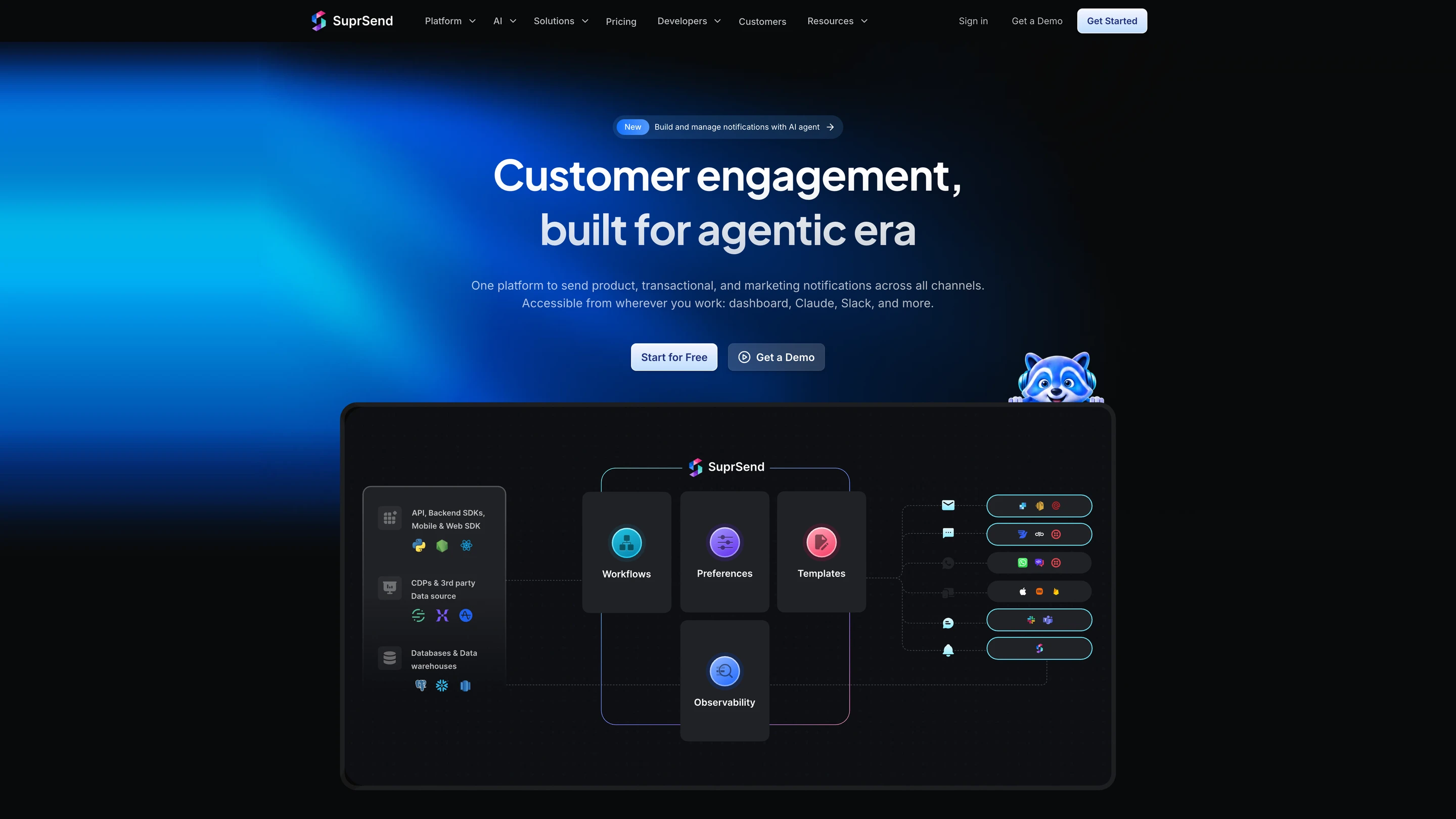
1. SuprSend
SuprSend is notification infrastructure for developer and product teams that need to send product and transactional notifications across channels without building the system in-house. It is the best fit when your real need is reliable notifications rather than marketing campaigns.
Key features:
- Single API across email, SMS, mobile push, web push, in-app inbox, WhatsApp, and Slack
- Visual workflow builder with batching, digest, delays, and channel routing
- Drop-in in-app inbox SDKs for React, Vue, Angular, Next.js, React Native, Flutter, Android, and iOS
- Broadcasts for one-time multi-channel sends, Lists for segmentation, and A/B testing on templates
- Preference center, vendor failover, and step-by-step delivery logs out of the box
Pros: purpose-built for product notifications, deep multi-tenancy, wide in-app inbox SDK coverage, and transparent free tier with usage-based pricing instead of sales-gated contracts. Broadcasts and Lists cover batch sends and segmentation. Cons: lighter than enterprise marketing platforms on consumer-lifecycle depth (no RFM scoring, no predictive CLV or churn models, no e-commerce catalog or native CDP), and a newer brand than incumbents.
Pricing: free tier plus usage-based paid plans, with no annual lock-in. See the SuprSend pricing page.
G2: SuprSend profile (Momentum Leader, High Performer, Easiest Setup badges).
Best for: product and engineering teams that need reliable multi-channel product notifications. Compare directly on our SuprSend vs Iterable page.
2. Braze
Braze is the most direct enterprise-tier Iterable alternative, with deep lifecycle orchestration through its Canvas Flow journey builder and broad channel coverage.
Key features:
- Canvas Flow for complex multi-step, multi-channel journeys
- Cross-channel messaging across push, email, in-app, SMS, and more
- Real-time personalization and advanced segmentation
- Strong experimentation and analytics
Pros: best-in-class lifecycle journey depth for enterprises. Cons: premium enterprise pricing and complexity that is more than product-notification teams need. See our Braze competitors and alternatives guide for more.
Pricing: custom, quote-based. Braze does not publish public pricing; contact sales.
G2: Braze profile.
Best for: enterprises that need deep lifecycle journey orchestration.
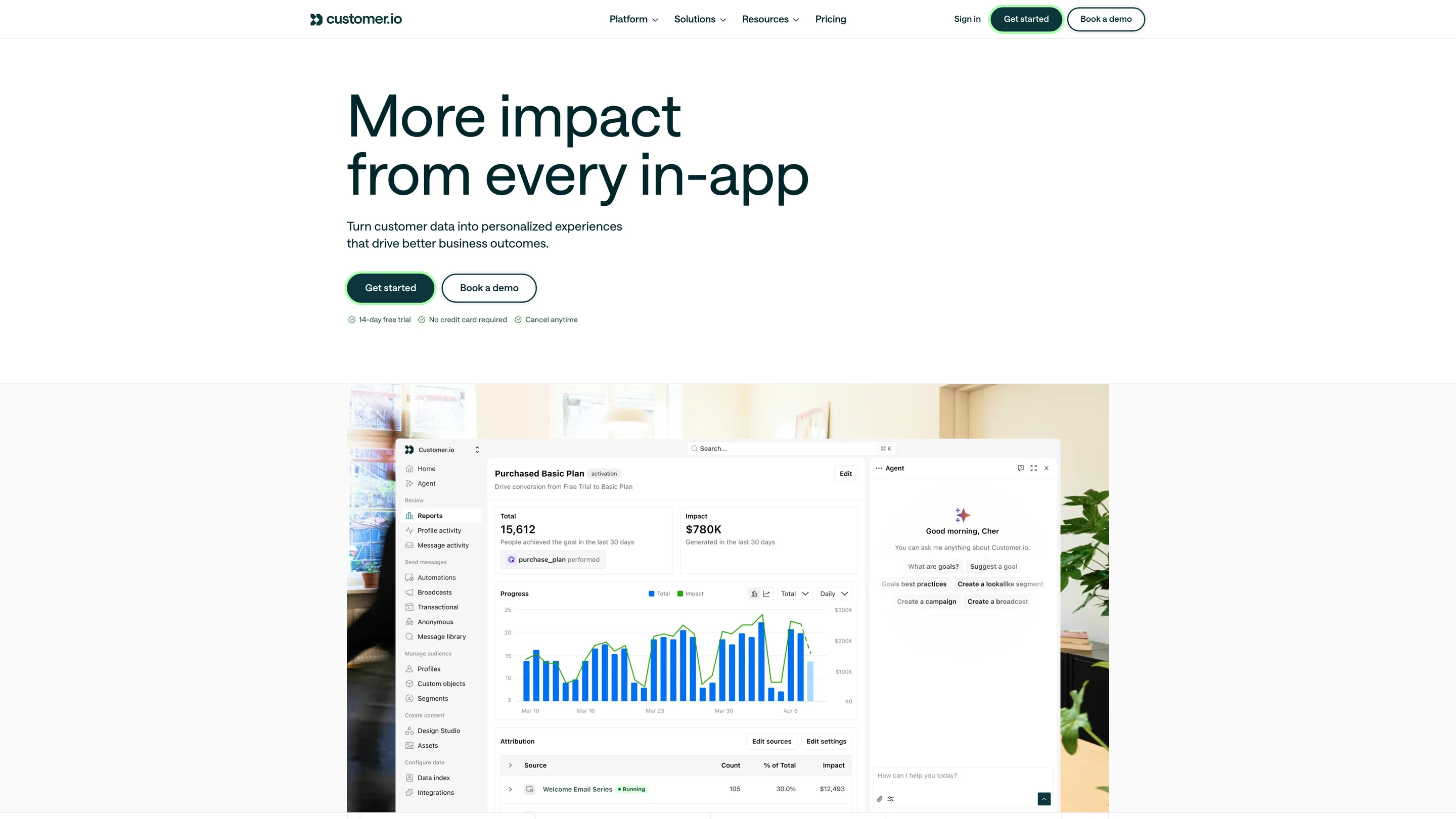
3. Customer.io
Customer.io is a mid-market marketing automation platform popular with product-led growth teams, and a more accessible alternative to Iterable's sales-gated model.
Key features:
- Event-triggered messaging across email, push, SMS, and in-app
- Visual workflow builder with strong segmentation
- Direct data warehouse and API integration
- Published, transparent pricing with a free trial
Pros: transparent pricing, developer-friendly, less procurement overhead than Iterable. Cons: still a marketing automation tool, so transactional and in-app notification use cases are secondary.
Pricing: Essentials at $100/month and Premium at $1,000/month, with Enterprise custom. Verified May 2026 on the Customer.io pricing page.
G2: Customer.io profile.
Best for: product-led growth teams that want transparent, flexible marketing automation.
4. CleverTap
CleverTap is a customer engagement platform strong with mobile-first and international consumer brands, particularly across Southeast Asia, India, and MENA.
Key features:
- Cross-channel campaigns across push, email, SMS, in-app, and WhatsApp
- Behavioral segmentation and analytics
- AI-driven engagement optimization
- Strong mobile engagement tooling
Pros: strong mobile and international engagement features. Cons: quote-based pricing and a broad suite orientation, similar to Iterable.
Pricing: custom, quote-based. CleverTap does not publish public pricing; contact sales.
G2: CleverTap profile.
Best for: mobile-first consumer brands with international reach.
5. MoEngage
MoEngage is a customer engagement platform for mobile-first consumer brands, with AI-driven channel optimization and broad regional coverage.
Key features:
- Cross-channel campaigns across push, email, SMS, in-app, and WhatsApp
- AI-driven send-time and channel optimization
- Lifecycle journey builder and segmentation
- Customer insights and analytics
Pros: strong mobile engagement and international reach. Cons: quote-based pricing and a full-suite footprint beyond pure notification needs.
Pricing: custom, quote-based. MoEngage does not publish public pricing; contact sales.
G2: MoEngage profile.
Best for: mobile-first consumer brands wanting AI-driven engagement.
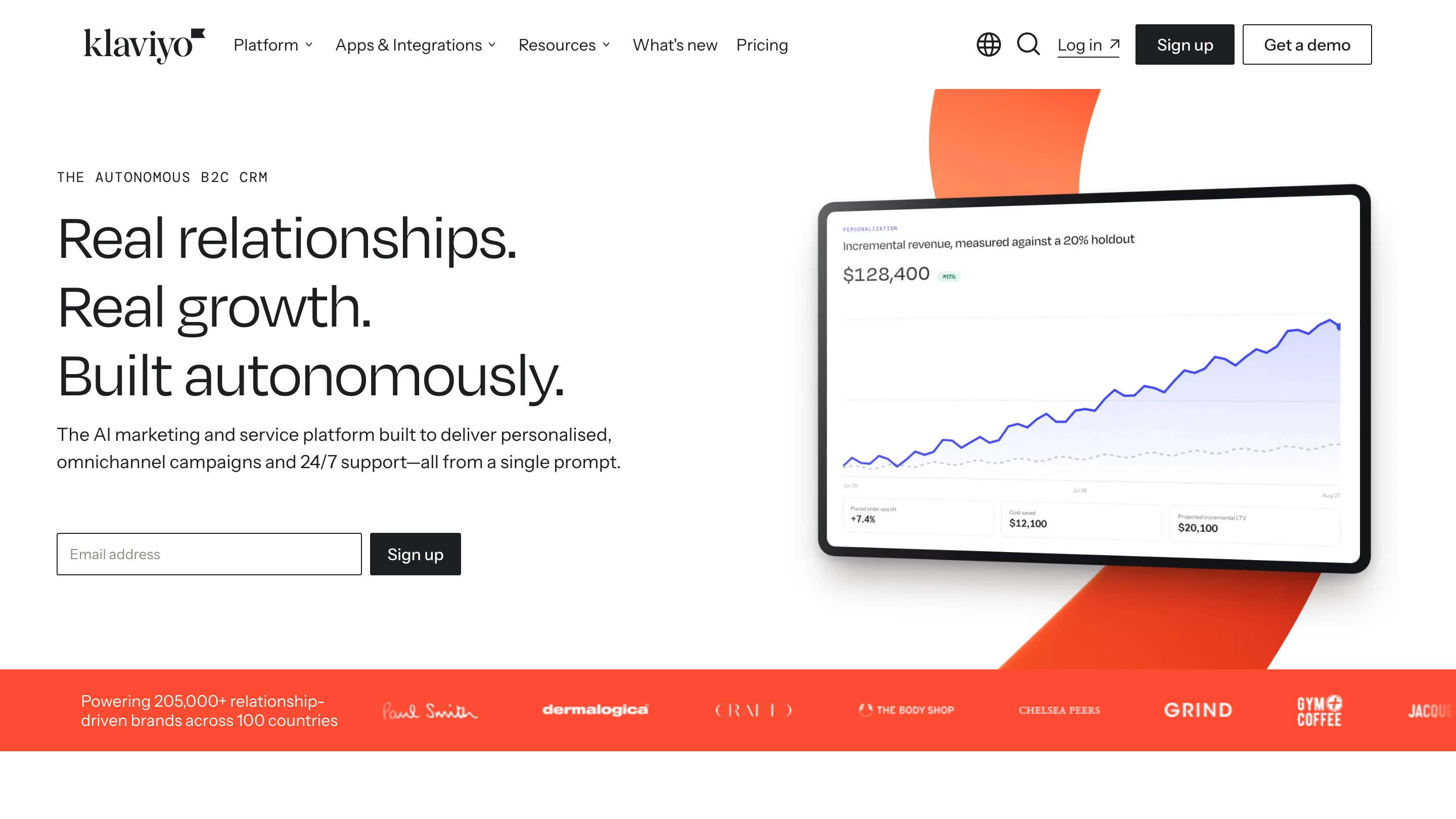
6. Klaviyo
Klaviyo is a marketing platform built for e-commerce, with deep integrations into commerce systems and strong email and SMS for online retail.
Key features:
- Deep e-commerce integrations (Shopify and others)
- Email and SMS marketing with product recommendations
- Segmentation built on commerce data
- Prebuilt flows for retail lifecycle
Pros: best-in-class for e-commerce marketing and product-data personalization. Cons: oriented around retail marketing, not developer-owned product notifications.
Pricing: free plan up to 250 profiles (500 emails per month); paid plans scale with contact count and sending volume. Verified May 2026 on the Klaviyo pricing page.
G2: Klaviyo profile.
Best for: e-commerce and retail brands focused on marketing.
7. Insider
Insider is an enterprise cross-channel personalization platform with AI-driven journeys and strong international and retail presence.
Key features:
- Cross-channel personalization across web, app, email, SMS, and WhatsApp
- AI-driven journey orchestration
- Predictive segmentation
- Strong retail and e-commerce tooling
Pros: feature-rich for enterprise personalization. Cons: quote-based enterprise pricing and a heavy footprint for smaller teams.
Pricing: custom, quote-based. Insider does not publish public pricing; contact sales.
G2: Insider profile.
Best for: enterprise retail brands needing cross-channel personalization.
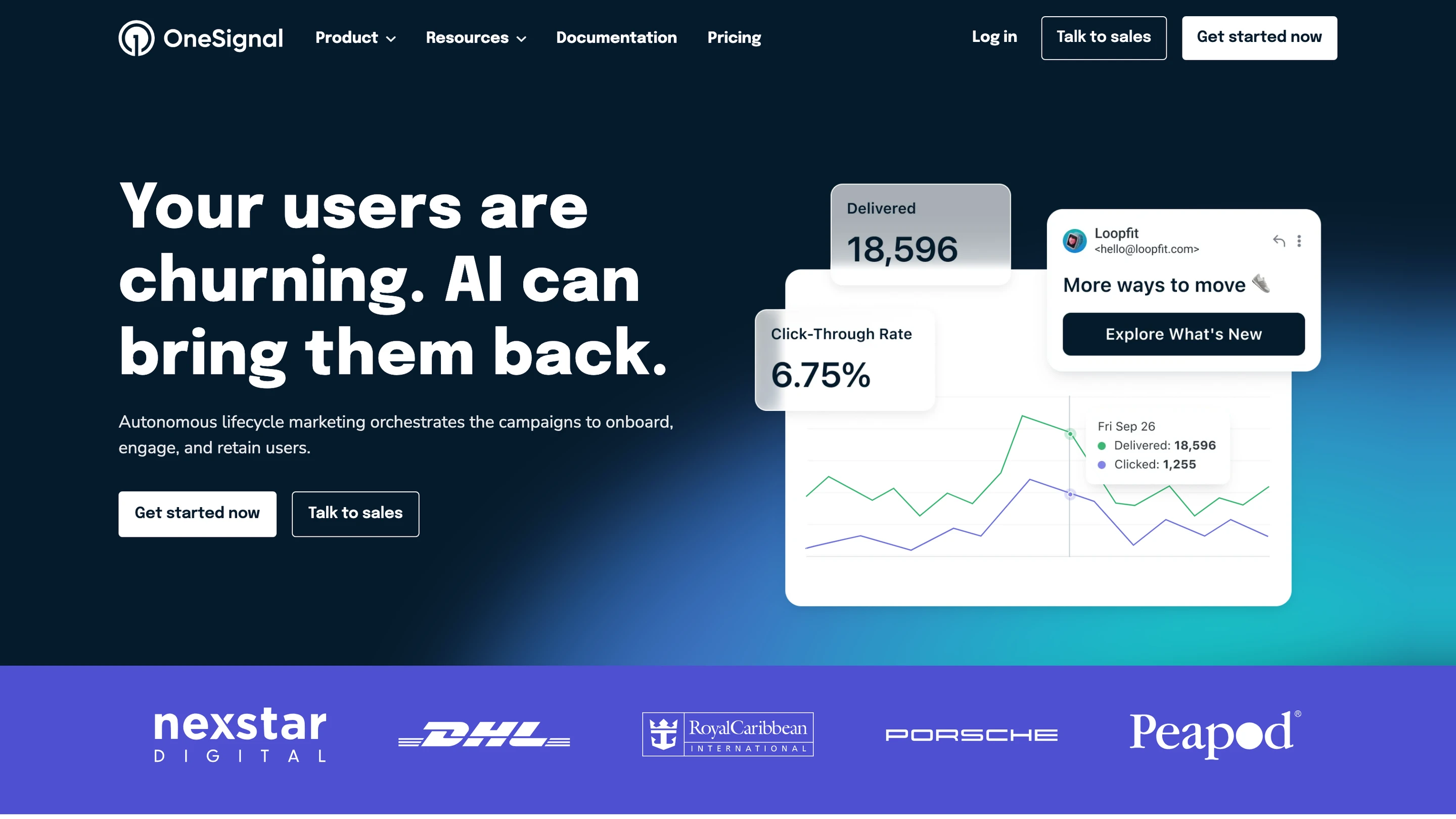
8. OneSignal
OneSignal is a push-first messaging platform widely used for mobile and web push at scale, with a generous free tier.
Key features:
- Mobile and web push, plus email, SMS, and in-app
- Journey and automation workflows
- Generous free plan for push
- Simple setup for push-first teams
Pros: strong push capabilities and an easy free starting point. Cons: less lifecycle marketing depth than enterprise platforms, and push-centric rather than full notification infrastructure.
Pricing: free plan at $0/month (10,000 monthly email sends, unlimited mobile push); Growth from $19/month; Professional and Enterprise custom. Verified May 2026 on the OneSignal pricing page.
G2: OneSignal profile.
Best for: mobile and web push-first teams that want a free starting point.
Which Iterable Alternative Fits Your Team?
The table summarizes the eight alternatives by pricing model and best fit.
If you need developer-owned product notifications, SuprSend is the right shape. If you need lifecycle marketing, pick the platform that matches your scale and channel mix, with Klaviyo for e-commerce, Braze for enterprise journeys, and Customer.io for transparent mid-market pricing. For the underlying build-versus-buy question, see build vs buy for notification service.
Frequently Asked Questions
What is the best Iterable alternative?
It depends on the job. For developer-owned product and transactional notifications, SuprSend is the best-shaped fit. For lifecycle marketing, Braze is the closest enterprise alternative, Customer.io suits mid-market teams, and Klaviyo leads for e-commerce.
Why do teams switch from Iterable?
Common reasons are sales-required pricing with no public rates, a marketer-first design that fits engineering-owned notifications poorly, and paying for a full marketing suite when the real need is reliable product notifications.
Does Iterable publish its pricing?
No. Iterable uses a sales-gated model without public rates, which is one reason teams evaluate alternatives like Customer.io, OneSignal, and SuprSend that publish transparent pricing or offer free tiers.
Is Iterable a marketing tool or notification infrastructure?
Iterable is a cross-channel marketing automation platform. If your need is developer-owned product notifications rather than lifecycle campaigns, notification infrastructure is the better-shaped category.
What is the difference between Iterable and SuprSend?
Iterable is a marketer-owned campaign platform, while SuprSend is developer-owned notification infrastructure for product and transactional messages. SuprSend includes Broadcasts, Lists, and A/B testing, but it is not built for deep consumer-lifecycle marketing the way Iterable is.
Which Iterable alternative is best for e-commerce?
Klaviyo is the strongest e-commerce option thanks to deep commerce integrations and product-data personalization. Insider also serves enterprise retail well. For product notifications inside an e-commerce app, SuprSend handles the transactional side.
Find the Right Shape for Your Notifications
If your real need is reliable product and transactional notifications rather than lifecycle marketing, SuprSend is purpose-built for it, with multi-channel orchestration, in-app inboxes, broadcasts, and preferences out of the box. Start building for free, or book a demo to see if it fits your use case.