Back
Notification Infrastructure
Open Source vs Managed Notification: An Honest 2026 Decision Guide

Nikita Navral
June 25, 2026
•
June 25, 2026
•
Read summary :
Last Updated: May 2026
"Open source is free" is the most expensive sentence in notification infrastructure procurement. Self-hosting Novu on Railway runs about $5 to $15 a month for a low-traffic deployment, but the production version with high availability, a proper Kubernetes cluster, and a platform engineer on call costs an order of magnitude more, before you have sent a single email.
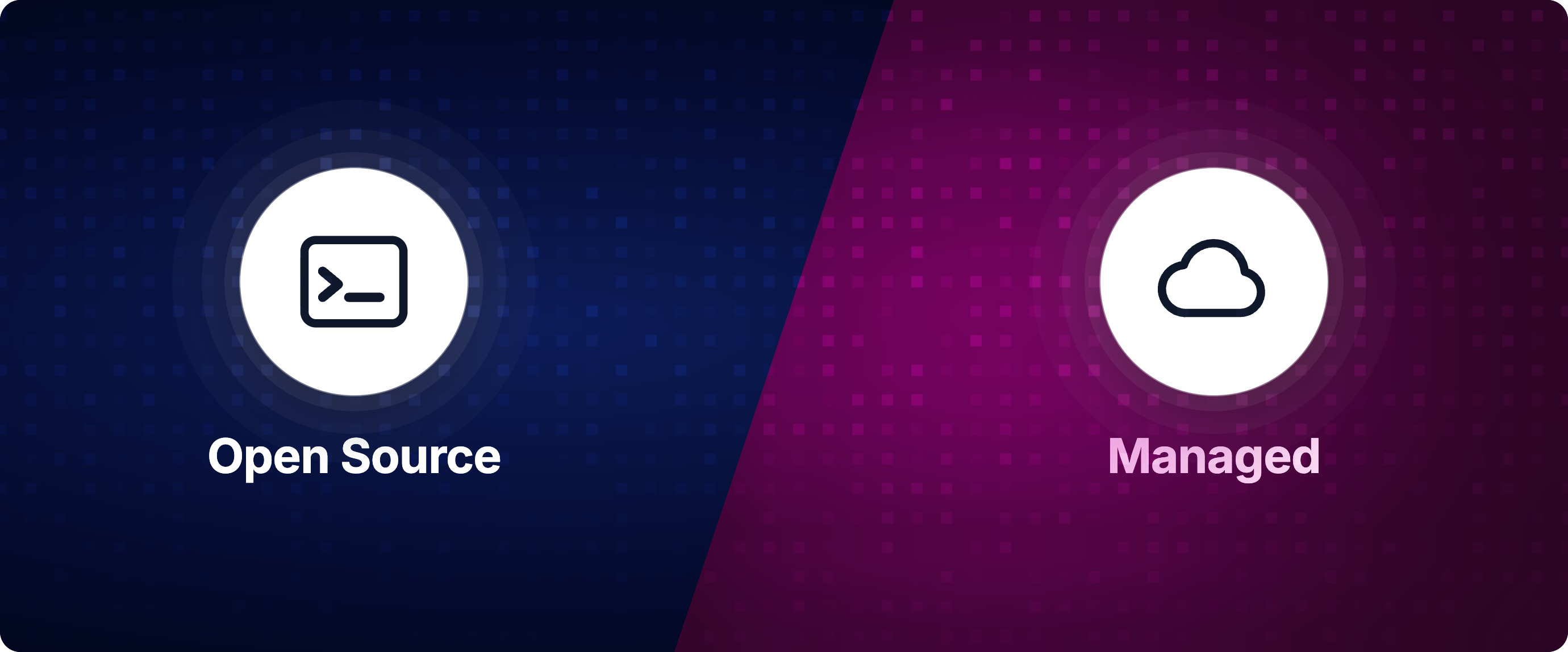
The real question is not "open source or managed." It is "where do you want to put your engineering time, and what data sovereignty do you need?" Open source notification platforms (Novu, ntfy, Gotify, Apprise) trade subscription cost for DevOps overhead and full data ownership. Managed platforms (SuprSend, Knock, Courier, MagicBell) trade subscription cost for time-to-ship and offloaded operations. Both are legitimate. Neither is universally cheaper.
This piece is for the engineering lead or VP who is weighing the two options and has been told "just use Novu, it's open source" or "just buy Knock, it's faster." Both are partial answers. We will lay out what each option actually costs, where each genuinely wins, and a decision framework that does not pretend the choice is obvious.
What Open Source Notification Actually Includes
The first mistake most teams make is treating "open source notification" as a single category. It is not. The open source notification landscape splits into two camps, and confusing them leads to picking the wrong tool.
Camp A: Product notification platforms. These compete directly with managed platforms like SuprSend, Knock, and Courier. The dominant player is Novu, which has roughly 39,000 GitHub stars and ships under an Open Core model - MIT license for the core, commercial license for enterprise features. The open source version covers workflows, templates, an in-app inbox, and integrations with email providers (SendGrid, Mailgun, SES, Postmark), SMS providers (Twilio, Plivo, Vonage), push (FCM, APNs, Expo, OneSignal), and chat (Slack, Discord, MS Teams). Novu Cloud adds enterprise features (advanced roles, dedicated SSO, data residency, HIPAA BAA) on top.
Camp B: Monitoring and ops notification libraries. These are not product notification platforms. ntfy is an HTTP pub-sub notification service optimized for server monitoring, cronjob alerts, and security event notifications, shipping under Apache 2.0 and GPLv2. Apprise is a 150-service notification library (BSD-2-Clause) for sending alerts via Slack, Discord, Telegram, Gmail, Twilio, and dozens of others, intended for sysadmin and developer scripting. Gotify, AirNotifier, and similar tools fit this camp too.
Camp B tools cannot drive transactional product notifications at SaaS scale. They have no concept of users, preferences, tenants, multi-channel routing, or template versioning. Picking ntfy when you need a Novu is the most common architectural error in this space. Most "open source notification" listicles do not draw this line clearly, and teams pay for the confusion later.
The Real Cost of Self-Hosting
The subscription bill is zero. The total cost of ownership is not. A realistic breakdown for a production deployment of Novu Community Edition (or any comparable open source notification platform) at moderate scale:
| Cost Component | Annual Estimate | Notes |
|---|---|---|
| Infrastructure (Kubernetes cluster, Postgres, Redis, observability) | $3,000 to $12,000 | Higher with HA, multi-region, or large analytics workload |
| DevOps engineering time (provisioning, upgrades, on-call) | $30,000 to $80,000 | Roughly 0.25 to 0.5 of an engineer; higher early, lower once stable |
| Compliance work (SOC 2, HIPAA, GDPR) | $15,000 to $100,000+ | You earn certifications for your org; you do not inherit them from the vendor |
| Underlying channel provider bills (SendGrid, Twilio, etc.) | Same as managed | OSS does not save you the SendGrid bill |
| Engineering opportunity cost (features your team is not shipping) | Hard to quantify | Usually the largest line item, hardest to surface |
The infrastructure line item is the one people quote. It is also the smallest. Production-grade self-hosting on Kubernetes typically lands at $200 to $500 a month in raw cloud cost. The DevOps line is where the actual money goes. Open source notification platforms are not maintenance-free; they require ongoing patching, upgrades, integration debugging, and someone who understands the underlying queue, database, and routing system well enough to wake up at 3 a.m. when push notifications stop flowing during a launch. Here is what typically breaks first when teams self-host.
Compliance is the line that surprises teams the most. A managed vendor's SOC 2 report covers the vendor's controls; if you self-host, your organization owns the controls and needs its own audit. For HIPAA, you sign a BAA with the vendor in the managed case; in the self-hosted case, you are the covered entity for your own deployment.
The Real Cost of Managed
Managed platforms charge a subscription. The base case is straightforward: a notification infrastructure platform at low-volume tiers runs roughly $0 to $250 a month, mid-market scales to $500 to $3,000 a month, and enterprise lands in the five-figure-per-month range. You can verify any specific vendor's pricing page directly.
The cost that does not appear on the invoice is platform-level vendor lock-in. Picking a managed notification platform locks your templates, workflows, and webhook payload contracts into that platform's shape, on top of whatever per-channel-vendor lock-in already exists at the delivery layer. Choosing a managed platform is choosing platform lock-in at the orchestration layer in exchange for offloading the orchestration work entirely.
The cost that managed platforms eliminate is real:
- No Kubernetes cluster to operate
- No upgrade nights for the notification service
- SOC 2, HIPAA BAA, GDPR, and CCPA controls inherited from the vendor
- Feature releases (new channels, new providers, observability improvements) arrive without your team building them
- Time-to-first-notification measured in days, not quarters
For most product teams, the managed bill is smaller than the loaded cost of running a self-hosted platform at the same uptime. The exceptions are the cases below.
When Open Source Notification Actually Pays Off
Four conditions, in order of how often we see them justify the choice.
1. Hard data sovereignty requirements
If your contracts, regulators, or customers require that notification data (PII, message content, delivery logs) never leave specific infrastructure under your direct control, a managed SaaS notification platform is off the table by default. Healthcare, defense, finance, and government deployments fall here. Self-hosting is not optional in these cases; it is the requirement.
2. The "ops notifications only" use case
If your notification need is server monitoring, cronjob alerts, security events, or internal alerting (not customer-facing product notifications), Apprise or ntfy will serve you better than any managed platform. They are purpose-built for this lane, and the managed platforms are over-engineered for it. The bill for a managed platform sending 5,000 sysadmin alerts a month is almost always more than the deployment of ntfy on a single $10 droplet.
3. You already have a mature platform team
If your organization runs a Kubernetes platform, has a dedicated SRE function, and treats internal infrastructure as a product, the marginal cost of adding one more service is lower than the cost the first team feels. Mature platform teams self-host more because they have already amortized the operational overhead across other services. For a detailed look at why building notifications is harder than it looks, even for mature teams, see our analysis.
4. You are operating at very high scale
Above roughly 20 million notifications per month, managed subscription tiers start to cost more than the loaded cost of running an in-house equivalent. The breakeven point varies by vendor and channel mix, but the curve eventually crosses. Companies sending hundreds of millions of notifications a month typically build or self-host because the math demands it.
When Managed Platforms Win
Four cases, also in order of frequency.
1. Multi-channel product notifications under 200 engineers
The default case for most SaaS companies. You need email, SMS, push, in-app inbox, maybe Slack, and the orchestration logic to route between them based on user preferences and engagement. The cost of building and maintaining the orchestration layer in-house exceeds the cost of a managed subscription by a wide margin, even before counting opportunity cost. See our build-versus-buy analysis for the full cost model.
2. Multi-tenant SaaS
Per-tenant branding, templates, vendor configurations, and preference centers are deceptively hard to build correctly. Managed platforms that treat multi-tenancy as a first-class concept (per-tenant overrides on templates, vendors, and preferences) save months of platform engineering you would otherwise spend reinventing the same patterns.
3. Compliance is a buying constraint
If your customers ask for SOC 2 Type 2, HIPAA BAA, GDPR DPA, or CCPA-aligned terms during procurement, inheriting these from a managed vendor moves your sales cycle by weeks. Self-hosting earns you the controls, but the audit work is yours.
4. Speed-to-market is the primary constraint
Pre-Series-B startups should almost never build or self-host notification infrastructure. The opportunity cost of three to six engineers tied up in plumbing is the entire next product release. Managed platforms ship a working notification stack in days. If you are still finding product-market fit, the wrong answer is a Kubernetes cluster.
A Decision Framework
Map your situation against the table below and pick the row that matches most closely. The framework is intentionally short because most decisions reduce to two or three variables.
| Your Situation | Right Choice |
|---|---|
| Strict data residency or air-gapped deployment required | Self-hosted open source (or self-hosted commercial) |
| Server monitoring, cron alerts, sysadmin notifications only | Open source ops tool (ntfy, Apprise, Gotify) |
| Product notifications across channels, under 200 engineers | Managed platform |
| Multi-tenant B2B SaaS with per-tenant branding | Managed platform with first-class multi-tenancy |
| Mature platform team, internal-only product notifications, >20M/month | Self-hosted open source (Novu CE) or self-built |
| Enterprise customer demanding on-prem with full SaaS feature set | Commercial self-hosted offering |
| Mixed: product notifications plus internal ops alerts | Hybrid (see below) |
The Hybrid Pattern Most Mature Teams End Up With
The pattern we see most often at companies above Series B is a hybrid: a managed notification platform for customer-facing product notifications (where time-to-ship, compliance, and multi-channel orchestration matter), and an open source ops tool for internal alerting (where the use case is narrower and the data does not leave the building).
This split works because the two use cases optimize for different things. Customer-facing notifications optimize for reach, deliverability, and feature velocity. Internal ops notifications optimize for low latency, no per-message cost, and full control. Routing both through the same platform usually means over-paying for the second use case or under-serving the first.
Naming the split out loud during procurement saves arguments later. "We will use a managed platform for product notifications and run ntfy for our cron alerts" is a clean architectural decision. "We will pick one notification tool for everything" usually ends with the wrong tool in one of the two lanes.
Where SuprSend Fits
SuprSend is a managed notification infrastructure platform by default, with a self-hosted deployment option for enterprise customers who need it. This is not an open source dual-license; it is a commercial self-hosted product available under the Enterprise plan.
For most teams, SuprSend Cloud is the path: workflows, multi-channel orchestration, preferences, multi-tenancy, observability, and 9-channel template coverage shipped as a managed service. For organizations where data sovereignty makes Cloud impossible, SuprSend Self-Hosted deploys "the full notification infrastructure within their own VPC or on-prem environment" with "the same feature set as SuprSend Cloud" and "ownership of both control and data planes."
The deployment runs on Kubernetes v1.29+ with documented dependencies on PostgreSQL v17+, ClickHouse v24.9+, Redis v7.0+, NATS v2.10+, Temporal v1.25+, and optionally OpenSearch v1.3+ (see the full dependency list). This is real production infrastructure, not a docker-compose demo, and requires a platform team prepared to operate it.
To be honest about positioning: if your only requirement is "open source notification platform," Novu is the natural choice. SuprSend competes for the managed slot, and for enterprise self-hosted deployments where the buyer has decided the commercial Self-Hosted path is the right shape (commercial support, the full feature set, and a documented deployment pattern) over the open source one.
Frequently Asked Questions
Is open source notification really free?
The software license is free. The total cost of ownership is not. Infrastructure runs $200 to $500 a month at production scale, DevOps engineering time consumes 0.25 to 0.5 of an engineer ongoing, and your organization owns compliance controls that a managed vendor would otherwise carry. Open source can be cheaper, but only after you load all the costs.
What is the best open source notification platform?
For product notifications (transactional, in-app, multi-channel), Novu is the dominant open source choice in 2026 with roughly 39,000 GitHub stars and an Open Core model. For server monitoring and internal ops alerts, ntfy and Apprise are purpose-built and serve that use case better than any product notification platform, open source or managed.
Can I get SOC 2 or HIPAA by using open source notification?
The software does not give you the certification. Your organization earns SOC 2 and HIPAA by running its own audit and signing its own BAAs with downstream vendors. A managed platform passes inherited controls to your audit scope via the vendor's report and BAA; a self-hosted deployment means your team owns those controls end to end.
When should a startup self-host notifications?
Almost never before Series B, unless data residency is a hard contractual requirement. The opportunity cost of engineering time spent on notification infrastructure plumbing exceeds the managed platform subscription many times over at early-stage scale.
What is the breakeven volume between managed and self-hosted?
Roughly 20 million notifications per month is where managed subscription pricing typically starts to exceed the loaded cost of self-hosting, assuming the team already has the platform engineering capacity. The exact breakeven varies by vendor pricing model and channel mix, so model your specific case before deciding.
Can I use both open source and managed notification platforms in the same company?
Yes, and many mature teams do. A common pattern is a managed platform for customer-facing product notifications (where compliance, multi-channel orchestration, and time-to-ship matter) plus an open source ops tool like ntfy or Apprise for internal monitoring and cron alerts. Splitting the two use cases usually outperforms running both through the same tool.
The Bottom Line
Open source notification is not free, and managed notification is not always worth the subscription. The honest answer depends on your data sovereignty requirements, your team's platform engineering maturity, and whether your use case is customer-facing product notifications or internal ops alerts. Most product teams under 200 engineers should pick managed, most regulated enterprises will need self-hosted, and most mature companies will run both.
If you want to see how a managed platform handles multi-channel orchestration and what a serious self-hosted deployment looks like, start building for free on SuprSend Cloud, or talk to us about Self-Hosted if your environment requires it.
On this page